

Some people spend a lifetime searching for their vocation. Nicolae Șerban found his in wood. For more than forty years, the craftsman from Rogoz, in the heart of Lăpuș Land, Maramureș, Romania, has shaped oak, ash, maple and linden into objects that quietly accompany people’s lives: gates that welcome visitors, crosses that guard memories, furniture that becomes part of a family’s story, and carved details that outlive generations. Since 1985, his workshop has been a place where patience has become a way of understanding the world. He learned the craft on his own, guided by curiosity, discipline and thousands of hours spent listening to the material in his hands. He chooses each species according to its purpose — oak above all for gates and wayside crosses, willow and linden for spoons and vessels, oak and beech for furniture — always favoring wood that is straight-grained and free of knots.
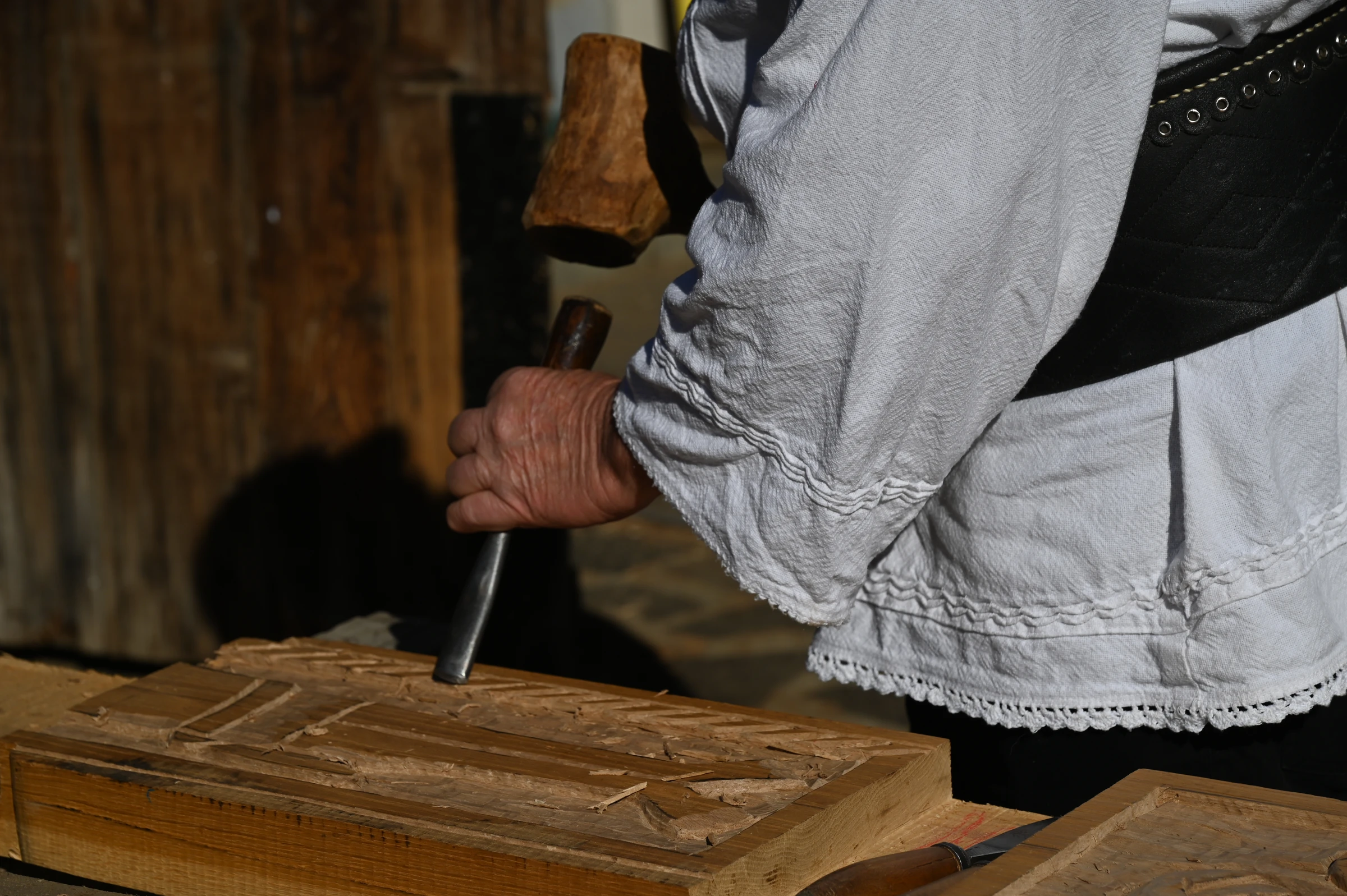
For Nicolae, every tree deserves respect long before it reaches the workshop. He selects wood from the local forests and follows the traditional rhythm of harvesting during autumn and winter, preferably under a full moon, when the sap has withdrawn and the timber is believed to endure the passage of time more faithfully. His tools remain remarkably simple — a chisel, a mallet and experienced hands. Modern machinery helps prepare the raw material, but the final dialogue with the wood is always carried out by hand.
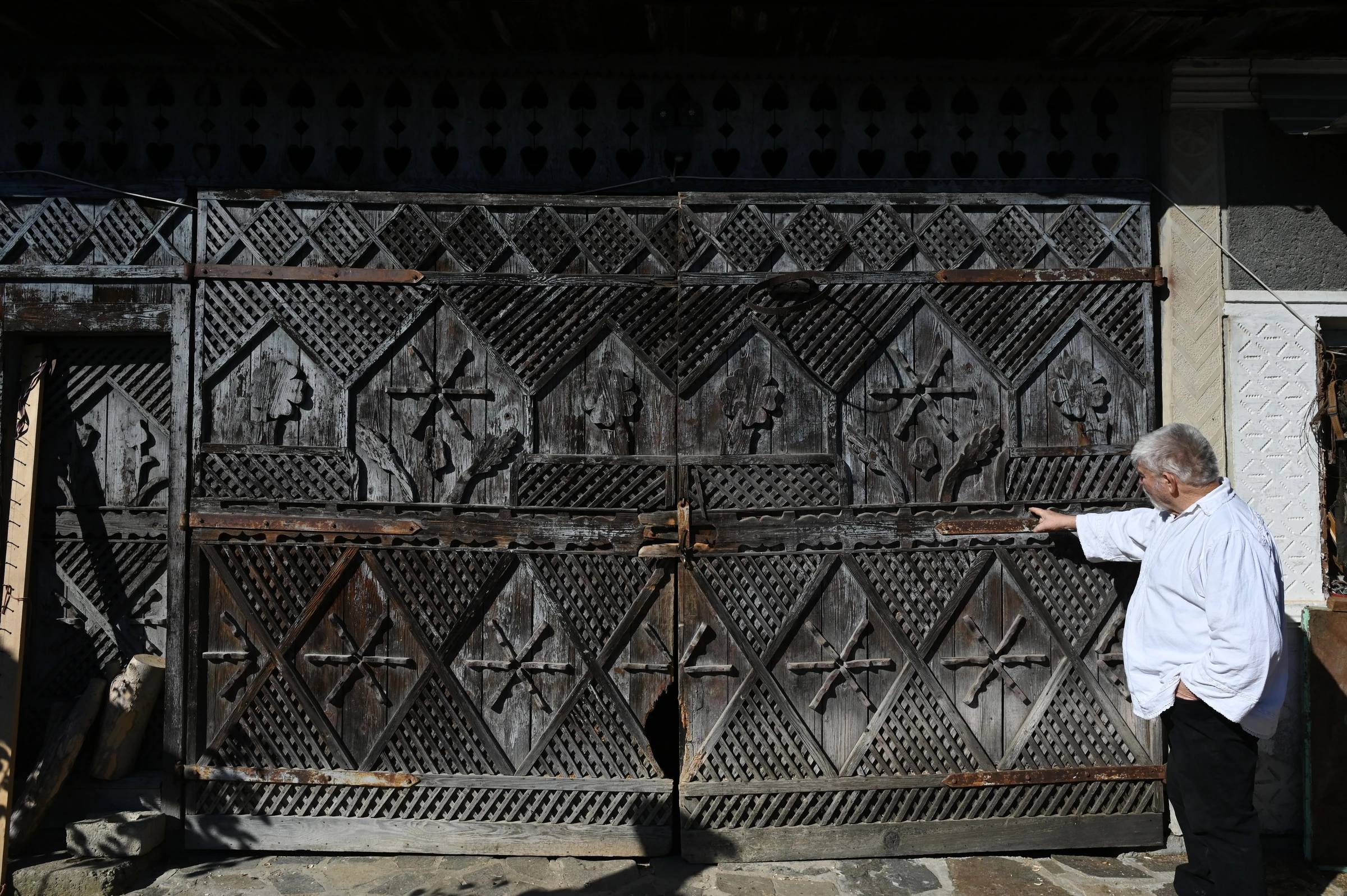
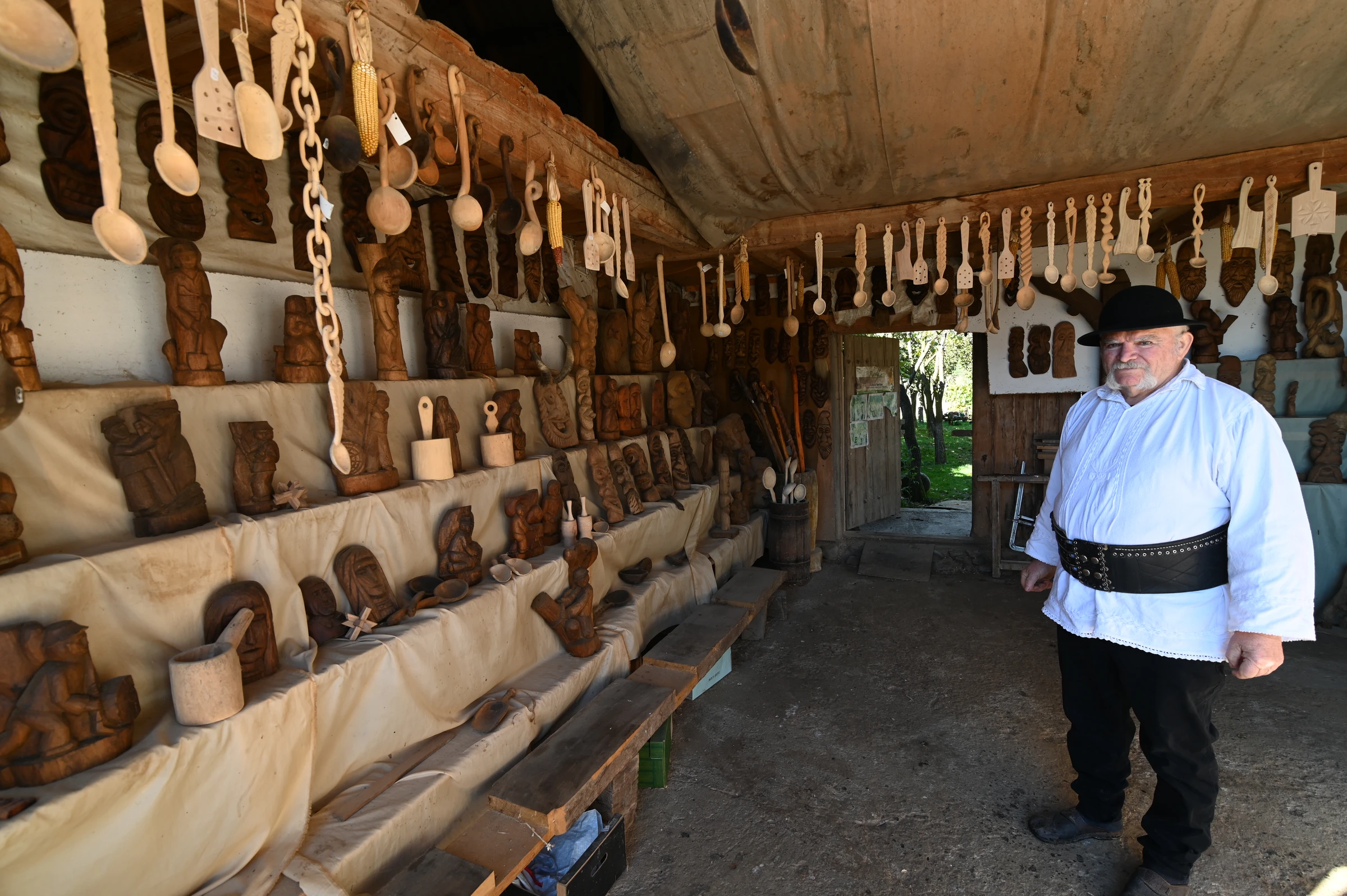
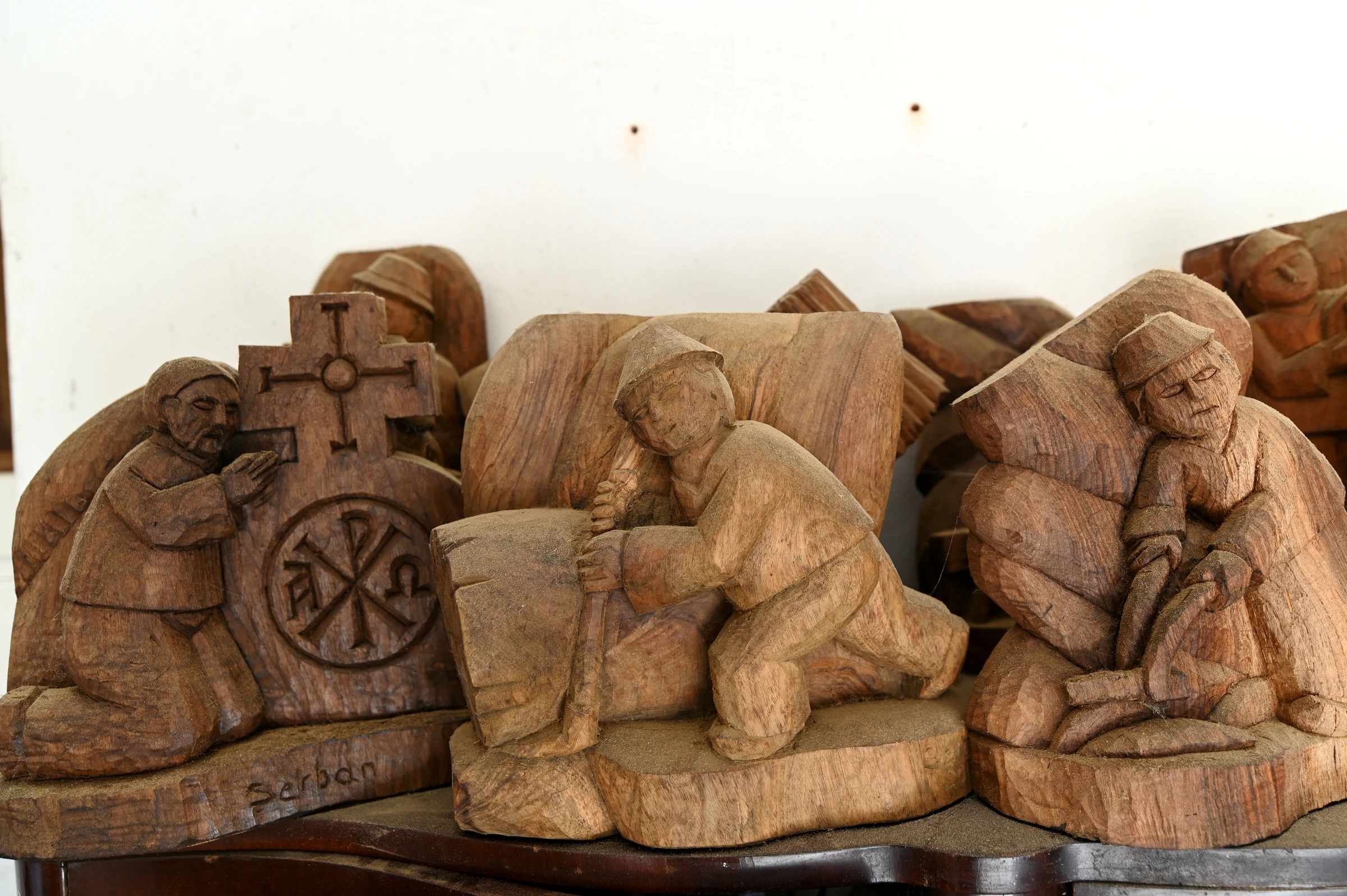
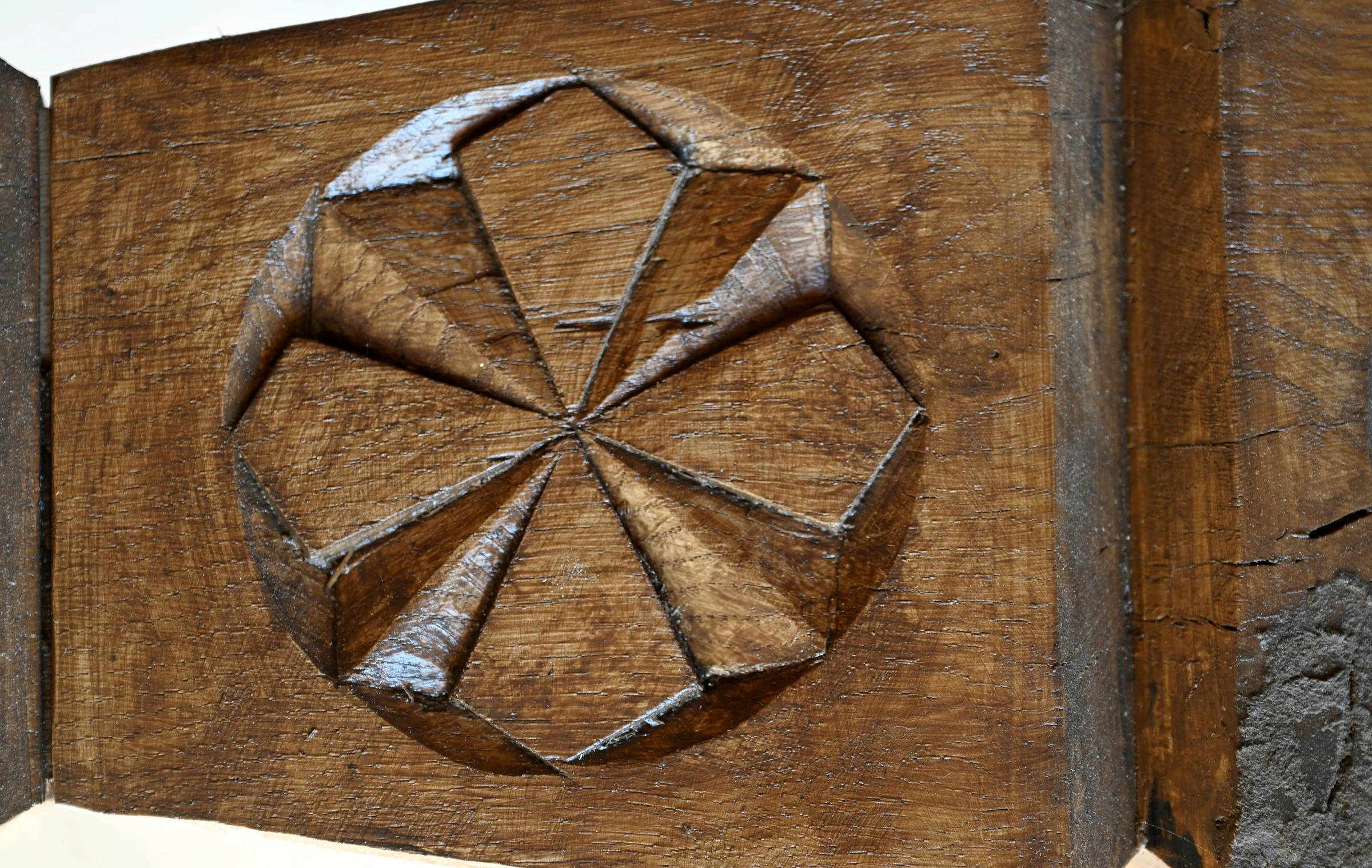
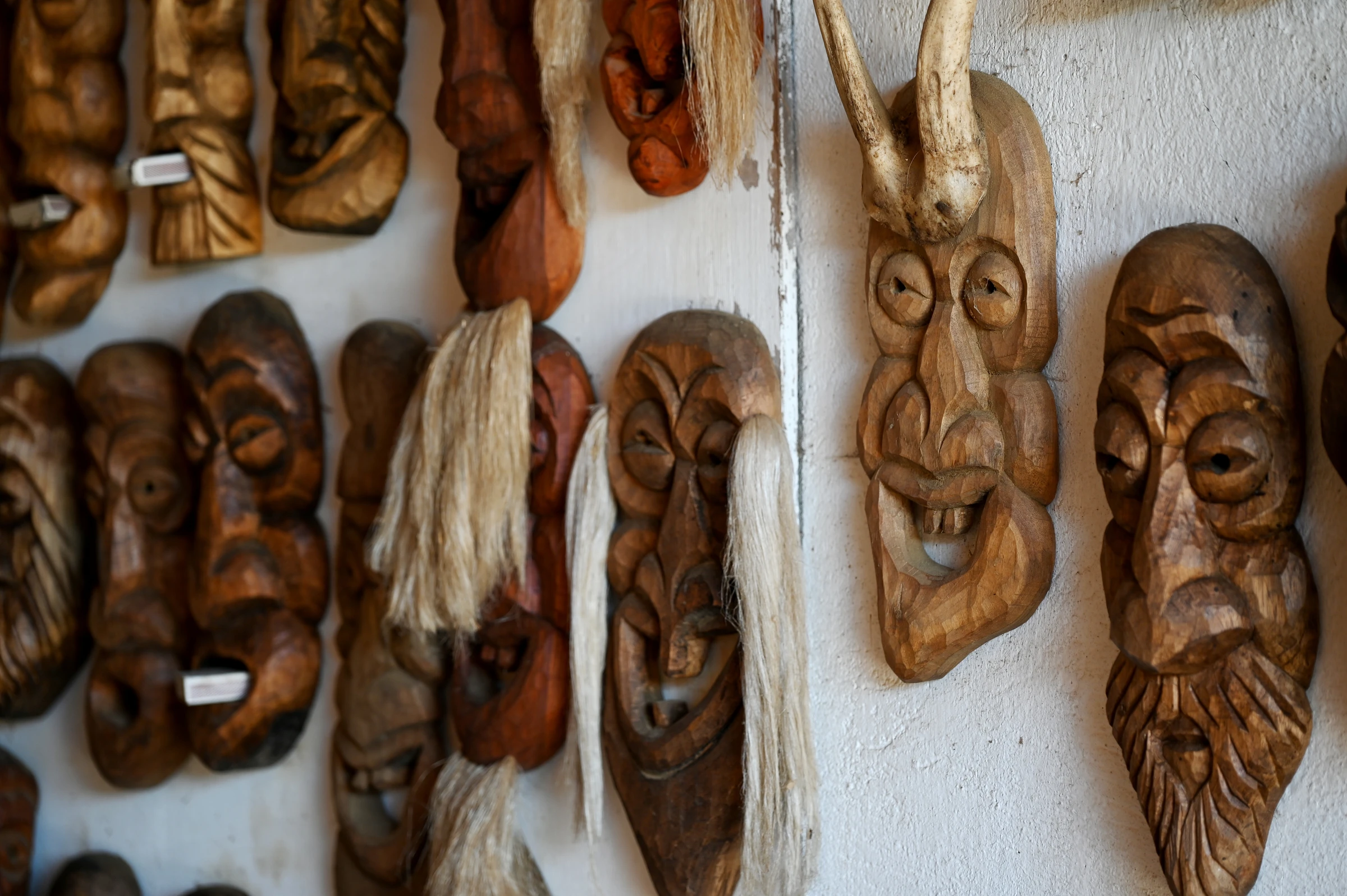
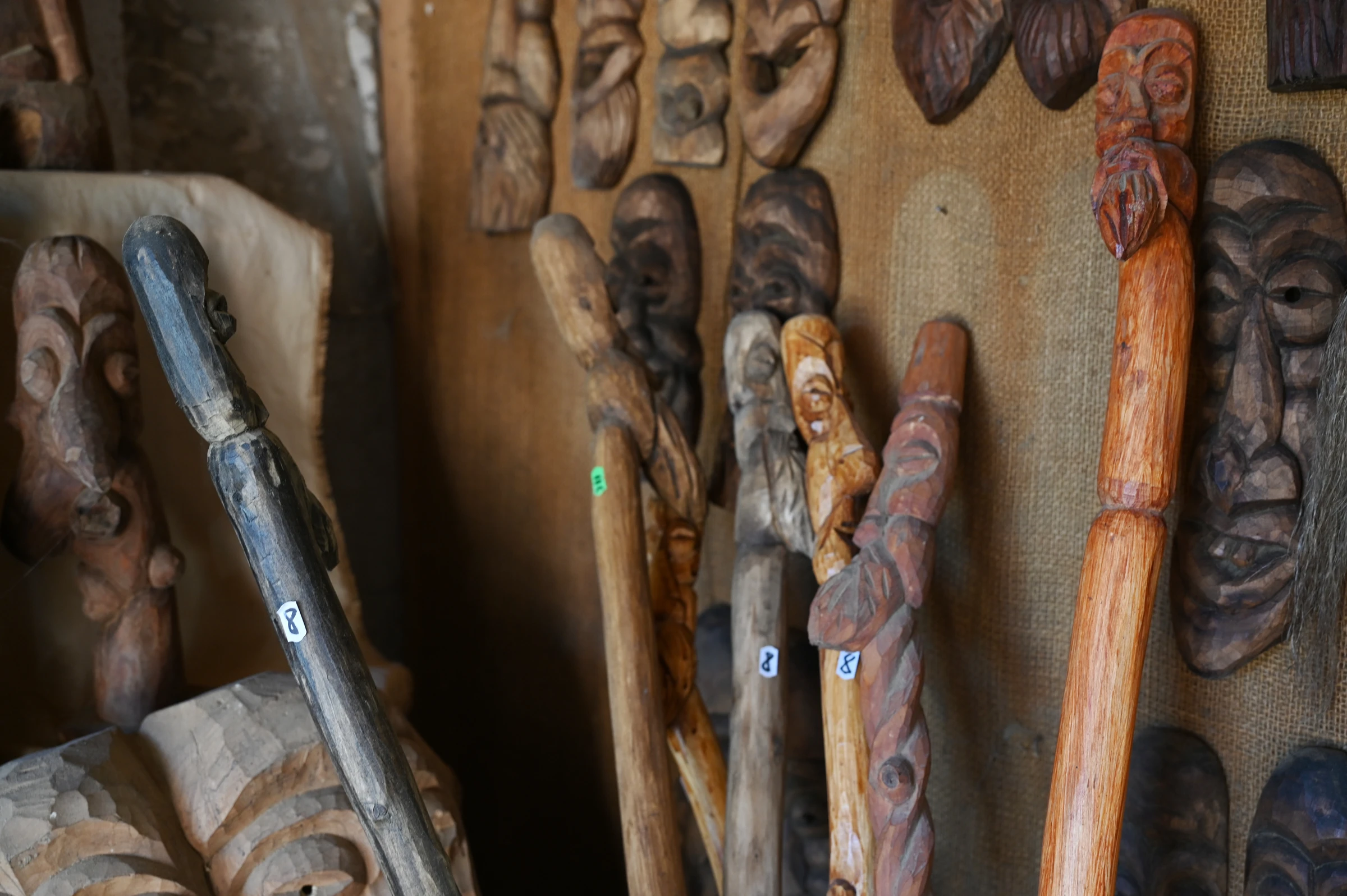
His gates carry their own quiet language of symbols: the rope, the Tree of Life, the rope braided in three strands as a mark of the Holy Trinity, the flower of life as a bond with nature, and the rhombus with a star, joining heaven and earth. It is in his wayside crosses, however, that this vocabulary reaches its fullest expression — Nicolae carves an unusually wide range of forms, from the Celtic and Orthodox cross to the X-cross of St. Andrew, the chalice with wheat ears, the wolf’s fangs, the anthropomorphic sun and moon, and the seraphim, among many others. It is fitting, then, that demand for his wooden crosses continues to grow. His religious furniture, from iconostases to liturgical cupboards, carries its own motifs, including the icon register and acacia-leaf carvings. Beyond gates, crosses and furniture, his workshop also produces traditional household pieces — carved spoons, ladles, salt boxes, prosphora bread seals and pastoral vessels — as well as a more surprising, purely artistic side to his work: carved masks, including devil masks, and sculpted reliefs depicting peasant life and religious scenes.
Visitors are always welcome in Nicolae Șerban’s workshop, which also houses a small private ethnographic museum. There, the scent of fresh timber, the rhythm of the chisel, and the silence between each strike reveal something increasingly rare: craftsmanship that still measures time in generations and not so much in deadlines. Nicolae regularly takes part in craft fairs and exhibitions, both in Romania and abroad, and can also be found on Facebook, under “Troițe maramureșene / sculptor Șerban Nicolae.”
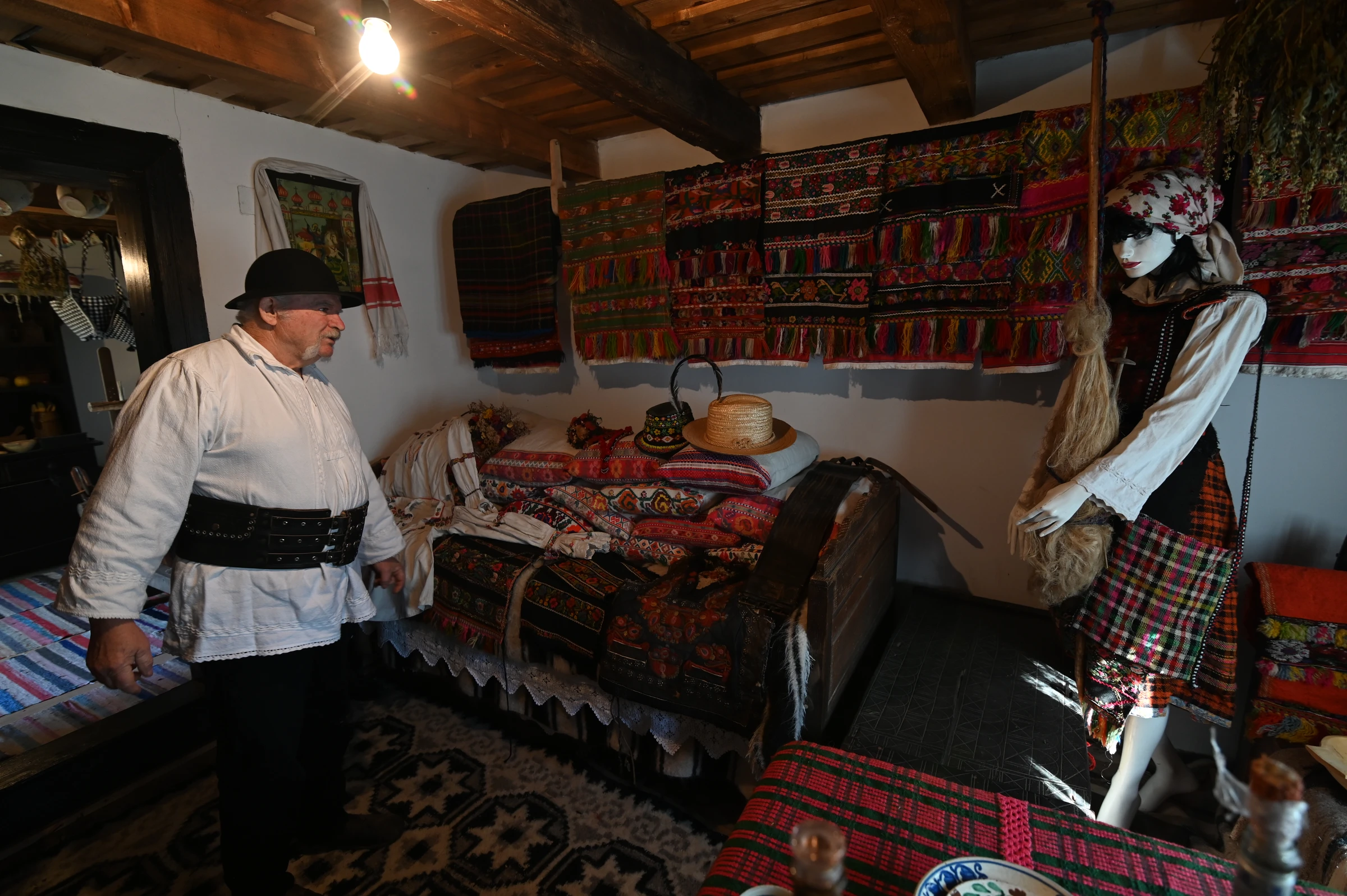
Șerban Nicolae


Share:
Șerban Nicolae
Contacts:
- Address: No. 247, Principală Street, Rogoz, Târgu Lăpuș, Maramureș, Romania
- Phone: +40 745 642 120
- Facebook: https://www.facebook.com/troiteserbanrogoz
- Languages: Romanian
- Receiving visitors: Yes – workshop open to visitors, exhibition, shop, apprenticeships and short training courses available